Switzerland has three airports with regular scheduled passenger service — Zurich, Geneva and Basel-Mulhouse — and a handful of regional fields whose commercial traffic has largely stopped. That distinction matters more than any list of terminals: several guides still name airlines and routes that disappeared years ago, which is how travellers end up planning a connection that no longer exists. Below is what each Swiss airport actually does today, and which one to fly into for the destination you have in mind.
The three airports with scheduled flights
Between them, these three handle almost all of Switzerland’s passenger traffic. If you are booking a commercial ticket into the country, it will almost certainly land at one of them.
Zurich Airport (ZRH)
Switzerland’s largest airport, nine kilometres north of central Zurich, handled 32.6 million passengers in 2025. It is the hub for Swiss International Air Lines, Chair Airlines and Helvetic Airways, and it has the country’s widest long-haul network. The airport has its own railway station directly beneath the terminals, with frequent direct trains to Zurich main station and onward across the country.
Fly into Zurich for eastern and central Switzerland, for the Grisons resorts, and for any intercontinental connection.
Geneva Airport (GVA)
Geneva Airport sits just four kilometres north-west of the city centre — closer to town than almost any comparable European airport — and handled 17.8 million passengers in 2024. Swiss International Air Lines operates a hub here and easyJet Switzerland maintains one of its largest bases, which is why fares from the UK and northern Europe are often lower into Geneva than into Zurich.
Geneva is the airport of choice for the western Alps. The French Savoie resorts, the Valais and Mont Blanc are all within a two- to three-hour drive, which is why the arrivals hall fills with ski bags every Saturday between December and April. It is also the gateway for the city’s institutional traffic — the UN, the WHO, the WTO and some 180 permanent missions.
EuroAirport Basel–Mulhouse–Freiburg (BSL / MLH / EAP)
The one genuine oddity in Swiss aviation: the airport is physically located in France, in the Alsatian communes of Saint-Louis, Hésingue and Blotzheim, yet sits 3.5 kilometres north-west of Basel and is run jointly by Switzerland and France. It has separate Swiss and French exits from the same terminal, and three IATA codes depending on which side you book through. It handled 8.9 million passengers in 2024, with easyJet Switzerland as the dominant carrier.
Practical consequence worth knowing: which exit you use determines which country you are standing in. If someone is collecting you by car, agree on the Swiss or the French side before you land.
The regional airports — and what they actually offer now
This is where most published guides are out of date. Four Swiss airports are still routinely described as having scheduled services they no longer run.
Bern Airport (BRN)
Bern-Belp has no regular scheduled commercial passenger flights. Its largest carrier, SkyWork Airlines, went bankrupt in August 2018 and traffic never recovered. What remains is seasonal and charter flying, operated by carriers such as Helvetic Airways and Chair Airlines, plus general aviation. If a guide tells you that you can fly from Bern to London or Barcelona, it is quoting a timetable that has not existed for years.
Lugano Airport (LUG)
Four kilometres west of Lugano, with a runway that ends near the lake and a genuinely spectacular approach — but no regular scheduled flights. The Zurich link, latterly flown on behalf of Swiss, ended in 2019 and Swiss now routes those passengers onto the train instead. Travellers heading for Ticino generally fly into Zurich, or into Milan Malpensa, which is around 65 kilometres from Lugano.
Sion Airport (SIR)
Sion is primarily a Swiss Air Force base — one of the country’s fighter bases — with civil aviation as the secondary activity. Commercial flying is seasonal and charter only. Its location in the Rhône valley, 2.5 kilometres from the town, puts it unusually close to the Valais resorts, which is why it sees private and charter traffic in winter rather than scheduled airlines.
St. Gallen–Altenrhein Airport (ACH)
The exception among the regionals: Altenrhein, on the shore of Lake Constance, does still have scheduled service. People’s flies year-round to Vienna and adds Mediterranean routes in season — Palma de Mallorca, Ibiza, Olbia, Naples and others. It is also the closest airport to Liechtenstein.
Private aviation and the alpine fields
Business aviation is handled at Geneva and Zurich through dedicated FBO facilities, and at a small number of alpine airfields. The best known is Samedan (SMV) in the Engadin, five kilometres from St. Moritz. At 1,707 metres it is the second-highest airliner airport in Europe, with a single 1,800-metre runway, no scheduled passenger service, and a winter season dominated by private and corporate jets. The altitude, the surrounding topography and the wind make it a demanding approach; crews require specific familiarisation.
Emmen, near Lucerne, is a military airfield operated by the Swiss Air Force with only limited civil use.
Which airport for which destination
For most alpine destinations the decision comes down to Geneva or Zurich. Geneva serves the western Alps, Zurich the east. The drive times below are the ones we actually schedule from Geneva Airport, with our fixed one-way fare per vehicle:
| From Geneva Airport | Drive time | Distance | From |
|---|---|---|---|
| Geneva city centre | 20 min | 8 km | CHF 130 |
| Chamonix | 1 h 10 | 88 km | CHF 402 |
| Verbier | 1 h 50 | 155 km | CHF 670 |
| Courchevel | 2 h 15 | 190 km | CHF 810 |
| Zermatt (Täsch) | 2 h 45 | 245 km | CHF 1030 |
Zermatt is car-free, so road transfers terminate at Täsch, five minutes by train from the village. For the Grisons — St. Moritz, Davos, Arosa, Klosters — Zurich is the shorter drive. Our guide to the ski resorts near Geneva goes through each area in detail.
Getting from the airport to your destination
Zurich and Geneva both have railway stations at the terminal, and the Swiss rail network is genuinely excellent for city-to-city travel. Where the train stops making sense is the last leg into the mountains: a Geneva–Zermatt journey involves several changes, and doing it with ski bags, small children or a 6 a.m. arrival is a different proposition from doing it with a cabin bag.
That is the gap a private transfer fills. Our Geneva airport transfers are booked per vehicle rather than per seat, at a price fixed in writing before departure. Tolls, motorway vignettes, fuel and the chauffeur’s waiting time are included, as is flight tracking, meet & greet in the arrivals hall with a name sign, and 60 minutes of free waiting after landing. Child and booster seats are provided at no charge on request. There is no night surcharge, no weekend rate and no peak-season increase during the ski months.
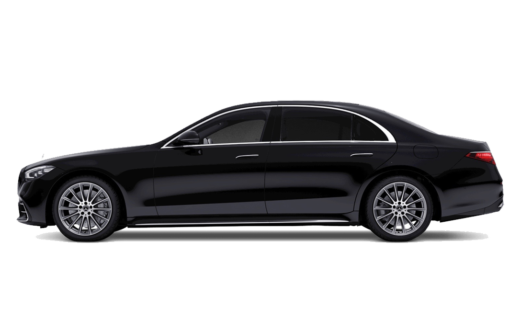
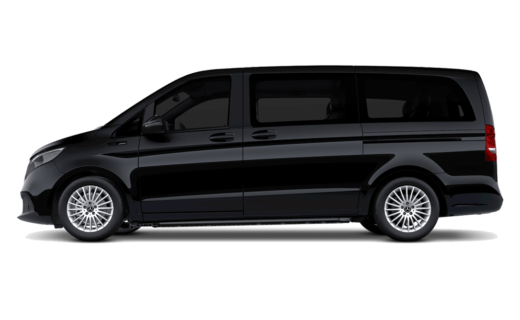
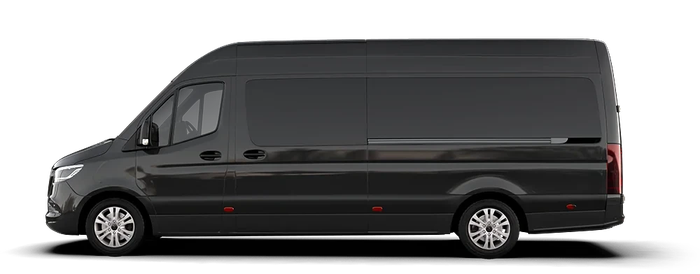
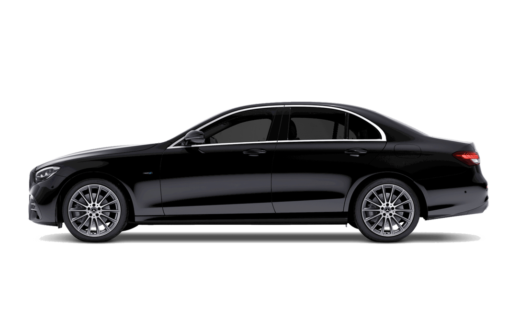
The fleet is Mercedes-Benz throughout: E-Class and S-Class for up to three passengers with three bags, V-Class for up to seven passengers and seven bags — the usual choice for families and ski equipment — and Sprinter for larger groups.
Frequently asked questions
How many international airports does Switzerland have?
Three carry regular scheduled passenger service: Zurich, Geneva and EuroAirport Basel–Mulhouse–Freiburg. Several others hold international status but currently operate only seasonal, charter or general-aviation traffic.
Which is the busiest airport in Switzerland?
Zurich, with 32.6 million passengers in 2025, ahead of Geneva at 17.8 million in 2024 and Basel-Mulhouse at 8.9 million in 2024.
Which airport is best for skiing in Switzerland?
Geneva for the western Alps and the Valais — Verbier, Zermatt, Crans-Montana — and for the French resorts across the border. Zurich for the Grisons: St. Moritz, Davos, Klosters, Arosa.
Can you fly into Bern or Lugano?
Not on a scheduled service. Both airports lost their regular commercial flights — Bern after SkyWork’s bankruptcy in 2018, Lugano when the Zurich link ended in 2019. Both still handle charter and private traffic.
Is Basel airport in Switzerland or France?
The site is in France, in Alsace, but the airport is operated jointly by both countries and serves Basel, 3.5 kilometres away. The terminal has separate Swiss and French exits, so confirm which side you will use before arranging a pickup.
How long does it take to get from Geneva Airport to the city?
About 20 minutes by road for the eight kilometres into the centre, and under ten minutes by train to Genève-Cornavin.
Passenger figures: Zurich 2025, Geneva and Basel-Mulhouse 2024. Airport roles and service status verified July 2026 — regional schedules change, so confirm current flights with the airport or airline before booking.